
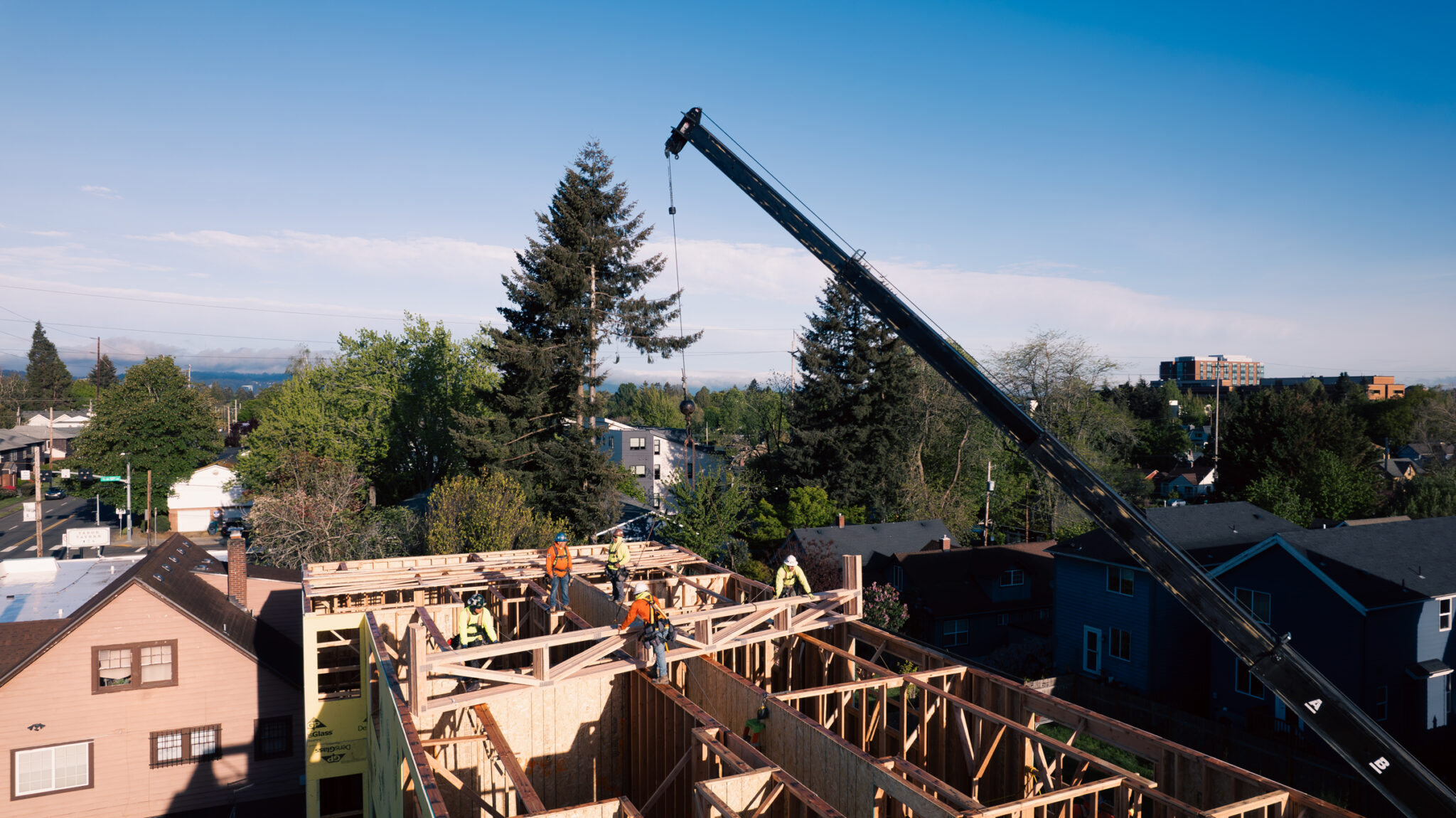
How We Coordinate Trades in Tight Urban Infill Projects
Introduction: Building Where Space Is a Constraint
Urban infill trade coordination is one of the most demanding aspects of construction in dense cities. When projects are surrounded by existing buildings, active streets, utilities, and neighboring businesses, there is no room for improvisation. Every delivery, crew movement, inspection, and handoff must be planned with precision. Unlike open developments, urban infill work unfolds within tight boundaries that magnify even small missteps.
Modern Northwest regularly delivers projects in constrained urban environments where access is limited and sequencing determines success. Coordinating trades in these settings is not about moving faster—it is about moving smarter. Crews must share space, schedules must interlock, and decisions must anticipate ripple effects across the entire site.
Infill projects demand a mindset that prioritizes communication and foresight over brute force productivity. Traditional scheduling methods break down when multiple trades are forced to operate within the same narrow footprint. At Modern Northwest, trade coordination becomes an operational strategy rather than a background task.
This article explores how Modern Northwest approaches urban infill trade coordination, from early planning and logistics to on-site execution and conflict resolution. The goal is not just efficiency, but predictability—creating job sites that function smoothly despite their physical limitations.
Understanding the Unique Challenges of Urban Infill Construction

Urban infill projects exist within living, functioning neighborhoods. Sidewalks remain open, traffic continues to flow, and adjacent buildings operate throughout construction. These conditions place pressure on coordination from the very first day.
Space constraints affect every trade differently. Mechanical contractors need staging areas for equipment. Concrete crews require precise timing to avoid blocking access. Electrical teams must navigate existing infrastructure that cannot be disrupted. When these needs collide, coordination failures become expensive very quickly.
Modern Northwest recognizes that urban infill environments eliminate the margin for error. There is rarely extra room for materials, backup crews, or schedule recovery. This reality requires a proactive approach that anticipates bottlenecks long before they form.
Another defining challenge is public interface. Noise restrictions, delivery windows, and pedestrian safety all influence how trades can operate. Compliance with city requirements often shapes the daily workflow more than the construction itself.
By treating these constraints as design inputs rather than obstacles, Modern Northwest aligns trade coordination with the realities of urban construction instead of working against them.
Early Planning as the Foundation for Trade Alignment
Successful urban infill trade coordination begins long before crews arrive on site. Preconstruction planning sets expectations and establishes a shared framework that guides every phase of work.
Modern Northwest engages trade partners early to map out sequencing, access points, and space usage. These conversations identify conflicts that would otherwise surface during construction, when changes are far more disruptive.
Rather than relying solely on high-level schedules, Modern Northwest develops detailed coordination plans that account for trade overlap and spatial limitations. Each contractor understands not only their scope, but how it interfaces with others operating nearby.
This planning phase also incorporates city regulations, delivery restrictions, and neighborhood considerations. By aligning trade schedules with permitted work hours and approved access routes, disruptions are minimized before they occur.
Early coordination builds trust. When trades see that their constraints are understood and respected, collaboration improves, and job site friction decreases.
Sequencing Trades When Space Is Shared
In tight urban infill projects, multiple trades often need to occupy the same physical area in close succession. Poor sequencing leads to congestion, safety risks, and productivity losses.
Modern Northwest prioritizes trade sequencing as a living process rather than a static schedule. Adjustments are made in real time as conditions evolve, without compromising overall project flow.
Instead of stacking trades simultaneously, work is phased vertically, horizontally, or temporally depending on site conditions. One crew completes a defined scope before another enters, reducing overlap and minimizing interference.
This approach requires discipline. Trades must adhere to agreed timelines, and deviations are addressed quickly to prevent cascading delays. Clear accountability ensures that shared spaces remain functional rather than chaotic.
By controlling sequencing with intention, Modern Northwest transforms limited space into an organized workflow that supports steady progress.
Logistics Planning in High-Density Locations
Material delivery is one of the most critical coordination challenges in urban infill construction. Without proper planning, trucks block streets, deliveries arrive too early, or materials overwhelm the site.
Modern Northwest uses just-in-time delivery strategies to reduce on-site storage requirements. Materials arrive when they are needed, not weeks in advance, keeping work areas clear and accessible.
Delivery schedules are coordinated across trades to avoid congestion. Staggered arrival times ensure that unloading can occur safely and efficiently without disrupting other operations.
Municipal regulations often dictate delivery windows, particularly in downtown areas. Modern Northwest integrates these constraints into trade schedules to prevent violations and maintain positive relationships with local authorities. Guidance from organizations such as the International Code Council (ICC) helps ensure compliance with site access and safety requirements in urban settings.
Well-managed logistics protect both productivity and public safety, reinforcing the importance of coordination beyond the site boundary.
Communication Systems That Keep Trades Aligned
Clear communication is the backbone of effective urban infill trade coordination. Without it, misunderstandings multiply quickly in confined environments.
Modern Northwest establishes consistent communication channels that keep all trades informed. Daily briefings, updated schedules, and on-site coordination meetings ensure that everyone operates from the same information.
Rather than relying on informal updates, structured communication protocols reduce ambiguity. Changes are documented, shared, and confirmed to avoid misinterpretation.
Digital tools support coordination by providing real-time access to schedules, drawings, and updates. However, technology never replaces direct conversation. Face-to-face discussions remain essential for resolving complex sequencing issues.
This balanced approach keeps communication efficient without overwhelming trades with unnecessary information.
Safety as a Coordination Priority
Urban infill sites amplify safety risks due to proximity, public exposure, and overlapping activities. Trade coordination plays a direct role in mitigating these hazards.
Modern Northwest integrates safety planning into coordination efforts rather than treating it as a separate function. Trade schedules are evaluated for potential conflicts that could compromise worker or pedestrian safety.
Clear access routes, designated staging areas, and controlled work zones reduce the likelihood of incidents. When multiple trades operate nearby, safety protocols dictate who enters and exits shared spaces.
Compliance with occupational safety standards is reinforced through coordinated planning. Resources from OSHA help inform best practices for managing tight job sites with multiple contractors present.
By aligning coordination with safety objectives, Modern Northwest creates environments where productivity and protection coexist.
Managing Inspections and Approvals in Dense Areas
Inspections in urban infill projects require precise coordination. Delays can halt multiple trades simultaneously, making timing critical.
Modern Northwest schedules inspections strategically to minimize downtime. Trades are prepared in advance, and documentation is organized to facilitate efficient review.
Coordination with inspectors ensures that access points are clear and that inspection areas are ready when required. This preparation reduces rework and repeat visits.
In some cases, inspections must occur while adjacent properties remain operational. Coordinated planning prevents disruptions and maintains compliance with local requirements.
Efficient inspection management supports overall project momentum and reinforces trust with regulatory authorities.
Resolving Conflicts Before They Escalate
Conflicts between trades are inevitable in constrained environments. The difference lies in how quickly and effectively they are resolved.
Modern Northwest addresses issues proactively through open communication and clear decision-making authority. Problems are identified early, discussed openly, and resolved without assigning blame.
This approach prevents minor disagreements from escalating into schedule disruptions. Trades understand that coordination decisions are made in the interest of the entire project, not individual scopes.
When adjustments are required, Modern Northwest evaluates impacts across all trades before implementing changes. This holistic perspective maintains balance and fairness.
Effective conflict resolution preserves relationships and keeps urban infill projects moving forward.
The Role of Experience in Urban Infill Coordination
Urban infill trade coordination cannot be learned solely from textbooks or templates. It requires experience gained from navigating real-world constraints repeatedly.
Modern Northwest brings a deep understanding of urban construction dynamics to every project. Lessons learned from previous infill sites inform future planning and execution.
This institutional knowledge allows the team to anticipate challenges that may not be immediately visible on drawings. Subtle details, such as street grades or neighboring building operations, influence coordination decisions.
Experience also builds credibility. Trades trust coordination plans when they see that decisions are grounded in practical understanding rather than theory.
How Modern Northwest Integrates Trades as a Unified Team

At Modern Northwest, trade coordination is built on collaboration rather than hierarchy. Each contractor is viewed as a partner contributing to a shared outcome.
Expectations are clearly defined, but flexibility is encouraged when conditions change. This balance fosters cooperation without sacrificing accountability.
Regular check-ins and transparent scheduling keep trades aligned with project goals. Success is measured not by individual efficiency, but by collective progress.
This team-oriented approach transforms urban infill projects from fragmented operations into cohesive workflows.
Adapting Coordination Strategies as Projects Evolve
Urban infill projects are rarely static. Conditions change as structures rise, access points shift, and scopes overlap differently.
Modern Northwest treats coordination as an adaptive process. Schedules are revisited regularly, and strategies evolve in response to site conditions.
This flexibility allows trades to remain productive even as constraints tighten. Adjustments are communicated clearly to avoid confusion.
Adaptability is not improvisation—it is informed responsiveness grounded in preparation.
Long-Term Benefits of Effective Trade Coordination
Well-coordinated urban infill projects deliver benefits that extend beyond construction completion. Reduced delays, improved safety, and stronger trade relationships contribute to overall project success.
Owners benefit from predictable schedules and controlled costs. Communities experience fewer disruptions. Trades work in environments that respect their expertise and time.
Effective coordination also enhances reputation. Projects that run smoothly in difficult conditions reflect positively on everyone involved.
Why Clients Trust Modern Northwest for Urban Infill Projects
Modern Northwest has built a reputation for delivering complex urban infill projects through disciplined coordination and thoughtful planning.
Clients trust the team to manage constraints without compromising quality. Trades appreciate clear expectations and consistent communication.
This trust is earned through experience, transparency, and a commitment to doing the work the right way.
Conclusion: Coordination as a Competitive Advantage
Urban infill trade coordination defines the success of construction projects in dense environments. Without it, even well-designed buildings struggle to come together efficiently.
Modern Northwest approaches coordination as a strategic advantage, not a logistical burden. By aligning planning, communication, safety, and execution, the firm delivers results in spaces where others struggle.
As cities continue to densify, the ability to coordinate trades effectively will only become more valuable. Modern Northwest stands ready to meet that challenge.
If you’re planning an urban infill project and need a partner who understands how to make limited space work, Modern Northwest brings the experience and coordination expertise to deliver with confidence.
Internal Links
External Links
- International Code Council (ICC): https://www.iccsafe.org/
- OSHA – Construction Safety Standards: https://www.osha.gov/
- Building Science Corporation: https://www.buildingscience.com/
