
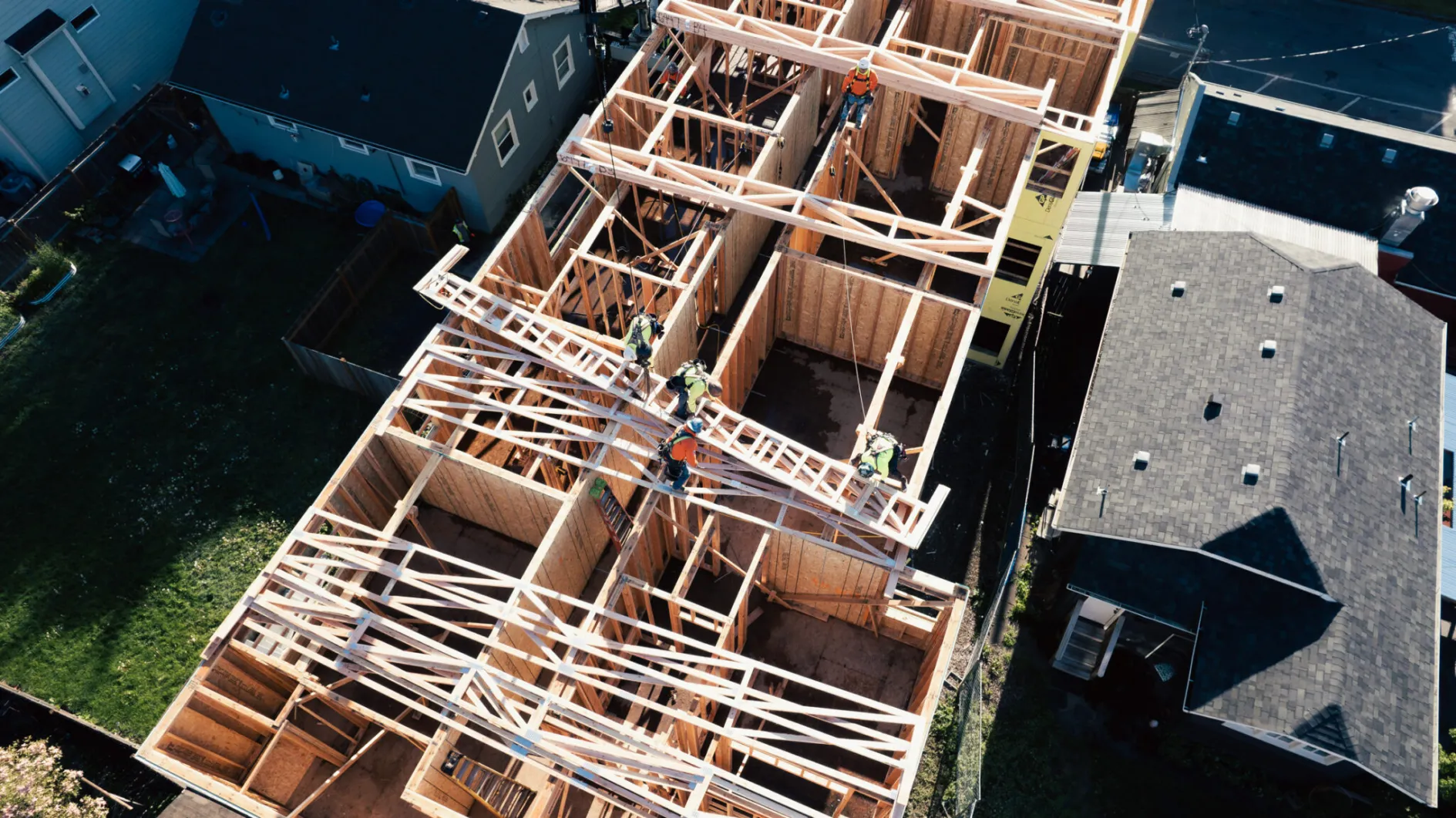
How We Reduce Disruption in Multi-Tenant Renovations
Introduction: Renovating While Life Continues
Multi-tenant renovation disruption is one of the most sensitive challenges in commercial construction. Unlike vacant spaces, these environments are alive with daily activity—employees working, customers arriving, patients receiving care, and businesses depending on uninterrupted operations. Renovation work must therefore unfold without destabilizing the very environment it is meant to improve.
At Modern Northwest, disruption is never treated as an unavoidable side effect of progress. Instead, it becomes a central design consideration from the earliest planning conversations. Every sequencing decision, material delivery, and work schedule is evaluated through a single question: how will this affect the people already inside the building?
This mindset changes the entire renovation process. Construction stops being an isolated technical effort and becomes a coordinated operational strategy that respects tenants, protects revenue, and preserves trust. Buildings continue functioning, relationships remain intact, and improvements happen without chaos.
In this article, we explore how Modern Northwest reduces multi-tenant renovation disruption through disciplined planning, adaptive scheduling, precise trade coordination, and continuous communication. The goal is not merely to complete construction—it is to complete it without compromising the life already happening inside the space.
Understanding the Complexity of Shared Buildings
Multi-tenant properties behave less like structures and more like ecosystems. Each occupant operates on a different rhythm, with unique sensitivities to sound, dust, access, and timing. What feels minor from a contractor’s perspective can feel overwhelming to a tenant trying to serve customers or meet deadlines.
Because of this, disruption is rarely caused by a single dramatic event. More often, it accumulates gradually through small, repeated inconveniences—unexpected noise, unclear signage, blocked corridors, or shifting schedules. Over time, these minor stresses erode confidence in both the renovation and the building’s management.
Modern Northwest begins every project by studying how the building actually functions, not just how it was designed. This includes identifying peak activity periods, quiet hours, delivery routes, and critical business operations that cannot tolerate interruption. Understanding these patterns allows renovation work to align with real-world use rather than theoretical schedules.
This awareness transforms disruption reduction from a reactive effort into a proactive strategy. Instead of solving problems after tenants complain, Modern Northwest prevents many of those problems from occurring at all.
Planning Before Construction Begins

The most effective way to reduce multi-tenant renovation disruption is to solve challenges before anyone steps onto the job site. Preconstruction planning becomes the stage where stability is designed into the project.
Modern Northwest collaborates closely with owners, property managers, and tenant representatives to map operational realities in detail. Conversations extend beyond construction drawings into daily routines—when offices open, when deliveries arrive, when quiet environments are essential, and when limited disruption might be tolerable.
With this information, renovation scopes are reorganized to minimize tenant impact. Activities that generate vibration, noise, or system interruptions are shifted to low-occupancy periods. Work zones are designed to remain contained, preventing disruption from spreading unnecessarily.
Equally important, expectations are set early. Tenants understand what will happen, when it will occur, and how long it will last. Predictability replaces uncertainty, and trust begins forming before construction even starts.
Scheduling Around Human Activity, Not Just Construction Logic
Traditional construction scheduling prioritizes efficiency of labor and materials. Multi-tenant renovations require a different hierarchy—people first, construction second.
Modern Northwest builds schedules around occupant behavior. Early mornings, evenings, or weekends may be used strategically for louder activities. Quiet daytime work focuses on low-impact tasks such as framing, layout, or finish preparation.
This thoughtful sequencing allows businesses to operate normally during peak hours while progress continues steadily behind the scenes. Rather than compressing disruption into intense bursts, impact is distributed carefully across time.
Flexible scheduling also allows quick adjustments when tenant needs change. A critical meeting, medical procedure, or retail event can reshape the day’s work plan without derailing the overall timeline. This adaptability reflects respect for occupants and confidence in coordination.
Phasing Work to Maintain Stability
One of the most effective disruption-reduction strategies is clear phasing. Instead of spreading construction throughout a building, Modern Northwest isolates work into defined zones that move in a controlled sequence.
Each phase begins with protective measures—temporary walls, sealed barriers, rerouted access, and clear signage—so tenants immediately understand boundaries. Once work in that zone is complete, the space is restored quickly before the next phase begins.
This creates a sense of progress rather than perpetual disruption. Tenants experience renovation as a series of contained transitions rather than a continuous disturbance.
Phasing also allows building systems to remain operational. Mechanical, electrical, and plumbing changes are coordinated carefully so essential services stay active wherever possible.
Managing Noise With Intention
Noise cannot be eliminated entirely, but it can be shaped. Modern Northwest approaches sound management as both a technical and communication challenge.
Quieter tools, alternative fastening methods, and temporary acoustic barriers reduce sound transmission. Work generating higher noise levels is scheduled strategically and communicated clearly in advance.
Equally important is avoiding simultaneous loud activities. Overlapping trades can multiply noise beyond acceptable thresholds. Coordinated sequencing prevents this escalation.
Advance notice gives tenants control. When people know what to expect, disruption feels manageable rather than chaotic.
Controlling Dust and Protecting Air Quality
Dust migration is one of the fastest ways to damage tenant trust. Even minor contamination can affect health-sensitive environments such as clinics, offices, or retail spaces.
Modern Northwest installs full containment systems that include sealed barriers, negative air pressure, and high-efficiency filtration. These measures capture airborne particles before they spread beyond the work zone.
Daily cleaning reinforces containment. Shared corridors, entrances, and common areas remain presentable, maintaining professionalism throughout construction.
Industry guidance from ASHRAE helps inform indoor air quality protection during renovation, supporting safe environments for occupants.
Preserving Access, Safety, and Code Compliance
Occupied buildings must remain safe at every moment of construction. Emergency exits, accessibility routes, and fire protection systems cannot be compromised.
Modern Northwest designs temporary circulation paths that remain intuitive and code-compliant. Clear signage, lighting, and protective barriers ensure safe movement through changing environments.
Coordination with local regulations and standards—including those from the International Code Council—ensures compliance throughout renovation.
Safety becomes a daily operational priority, not a static checklist.
Communication as a Disruption-Reduction Tool
Transparent communication transforms tenant perception. Without it, uncertainty magnifies every inconvenience.
Modern Northwest provides consistent updates outlining upcoming work, expected impacts, and durations. Messaging is tailored to the building’s occupants rather than generic notices.
Open feedback channels allow concerns to surface early, enabling adjustments before frustration grows.
This steady dialogue builds confidence and keeps relationships strong throughout renovation.
Coordinating Trades to Prevent Congestion and Compounding Impact
In occupied renovation environments, congestion is rarely just an inconvenience. It becomes a multiplier of disruption that affects sound levels, safety awareness, productivity, and tenant perception all at once. When too many crews operate within the same circulation path or adjacent work zones, even routine tasks can begin to feel chaotic to the people sharing the building.
Modern Northwest approaches trade coordination as a spatial and behavioral exercise rather than a simple schedule alignment. Each subcontractor’s presence is mapped not only in time, but in movement patterns, material staging needs, and acoustic footprint. By visualizing how crews physically interact with the environment, the team prevents bottlenecks before they occur.
This level of orchestration allows work to continue at a steady pace without overwhelming shared corridors, elevators, or service entrances. Tenants experience a site that feels orderly and intentional rather than crowded or unpredictable. That perception alone can dramatically reduce frustration, even when construction activity is visible.
Equally important, thoughtful coordination protects craftsmanship. When trades are not forced to rush or compete for space, quality improves naturally. The building benefits not only from reduced disruption, but from better long-term performance.
Managing Utility Transitions Without Interrupting Daily Operations
Few events create more anxiety in multi-tenant renovations than utility interruptions. Power shutdowns, water tie-ins, data rerouting, or HVAC transitions can instantly halt business activity if not handled with precision. For tenants whose operations depend on continuity—medical providers, retailers, or professional offices—unexpected downtime is more than inconvenient; it can be financially damaging.
Modern Northwest treats utility work as surgical intervention rather than routine construction. Every shutdown is planned through layered contingency thinking: What happens if work takes longer than expected? What temporary systems are required to bridge the transition? How will tenants be notified, and how far in advance?
Where possible, redundant temporary services are installed so occupants experience little to no interruption. When shutdowns are unavoidable, they are scheduled during the lowest-impact windows and executed with tightly coordinated crews prepared to complete the work efficiently.
Guidance from organizations such as the National Fire Protection Association (NFPA)—particularly regarding life-safety systems during construction—helps inform these strategies and ensures that operational continuity never compromises occupant protection.
Through disciplined preparation and clear communication, utility transitions become controlled moments rather than disruptive surprises.
Upholding Professional Conduct in Shared Environments
Technical expertise alone does not define a successful occupied renovation. Human behavior plays an equally powerful role. In buildings where construction crews and tenants cross paths daily, courtesy, awareness, and professionalism shape the emotional tone of the entire project.
Modern Northwest establishes expectations that extend beyond safety compliance or workmanship standards. Crews are prepared to operate as temporary members of a functioning community, recognizing that every interaction contributes to trust—or erodes it.
Simple actions carry meaningful weight: maintaining clean pathways, minimizing unnecessary noise, greeting occupants respectfully, and responding quickly when concerns arise. These behaviors signal that the construction team understands the privilege of working inside an active environment.
Over time, this culture transforms perception. Instead of viewing renovation as an intrusion, tenants begin to see progress unfolding around them with care and intention. That shift is subtle but powerful, reinforcing confidence in both the project and the people delivering it.
Continuous Monitoring and Real-Time Adaptation

Even the most carefully constructed plan cannot anticipate every real-world condition. Buildings are dynamic, and tenant needs can shift quickly. True disruption reduction depends on the ability to observe, interpret, and adjust without losing momentum.
Modern Northwest maintains an active feedback loop throughout construction. Site leaders evaluate environmental conditions, workflow efficiency, and tenant response on a daily basis. When friction appears—whether from unexpected noise transmission, circulation conflicts, or schedule pressure—the team recalibrates immediately.
This responsiveness prevents small issues from accumulating into broader dissatisfaction. More importantly, it demonstrates accountability. Tenants recognize when their experience is being actively protected rather than passively managed.
Adaptability also strengthens project outcomes. Flexible sequencing, revised work hours, or modified installation methods can preserve both schedule integrity and occupant comfort simultaneously. In this way, monitoring is not simply oversight—it is a tool for continuous improvement.
Long-Term Benefits of Minimizing Disruption
Reducing disruption during renovation produces effects that extend far beyond construction completion. Tenant relationships remain stable, operational revenue continues uninterrupted, and confidence in property ownership is reinforced. These outcomes influence leasing decisions, renewal rates, and overall asset value in ways that are often underestimated.
Buildings that undergo respectful, well-managed improvements tend to emerge stronger not only physically, but reputationally. Occupants remember how the process felt. When renovation occurs without chaos, the improvement becomes a positive milestone rather than a stressful memory.
From a financial standpoint, continuity protects both short-term income and long-term positioning. Avoiding tenant turnover, business interruption, or reputational damage can outweigh many direct construction savings. In this sense, disruption control is not merely courteous—it is economically strategic.
Why Modern Northwest Excels in Occupied Renovation Environments
Modern Northwest’s strength in multi-tenant renovation work comes from a philosophy that blends technical precision with human awareness. The firm understands that construction inside active buildings is fundamentally different from building in empty space. Success is measured not only by finished materials, but by how well daily life continues throughout the journey.
This perspective shapes every phase of work—from early planning conversations to final project closeout. Coordination is intentional, communication is transparent, and adaptability is constant. Rather than forcing occupants to endure construction, the process is shaped around their presence.
Experience across complex occupied environments has refined this approach into a repeatable discipline. Clients gain confidence knowing their buildings can evolve without sacrificing stability, safety, or tenant satisfaction.
Conclusion: Progress That Respects the People Inside
Multi-tenant renovation disruption is often treated as unavoidable, yet experience proves otherwise. With thoughtful preparation, disciplined coordination, and genuine respect for occupants, meaningful transformation can occur while buildings remain fully alive.
Modern Northwest approaches each occupied renovation as a responsibility to protect both physical space and human experience. Improvements are delivered without unnecessary strain, allowing tenants to continue their work, care, and service with confidence.
For owners and managers planning renovations in active properties, choosing a partner who understands this balance is essential. Modern Northwest brings the planning insight, construction expertise, and occupant-focused mindset required to move buildings forward—without leaving disruption behind.
Internal Links
Modern Northwest Home
Our Services
Contact Us
External Links
ASHRAE
International Code Council
National Fire Protection Association
