
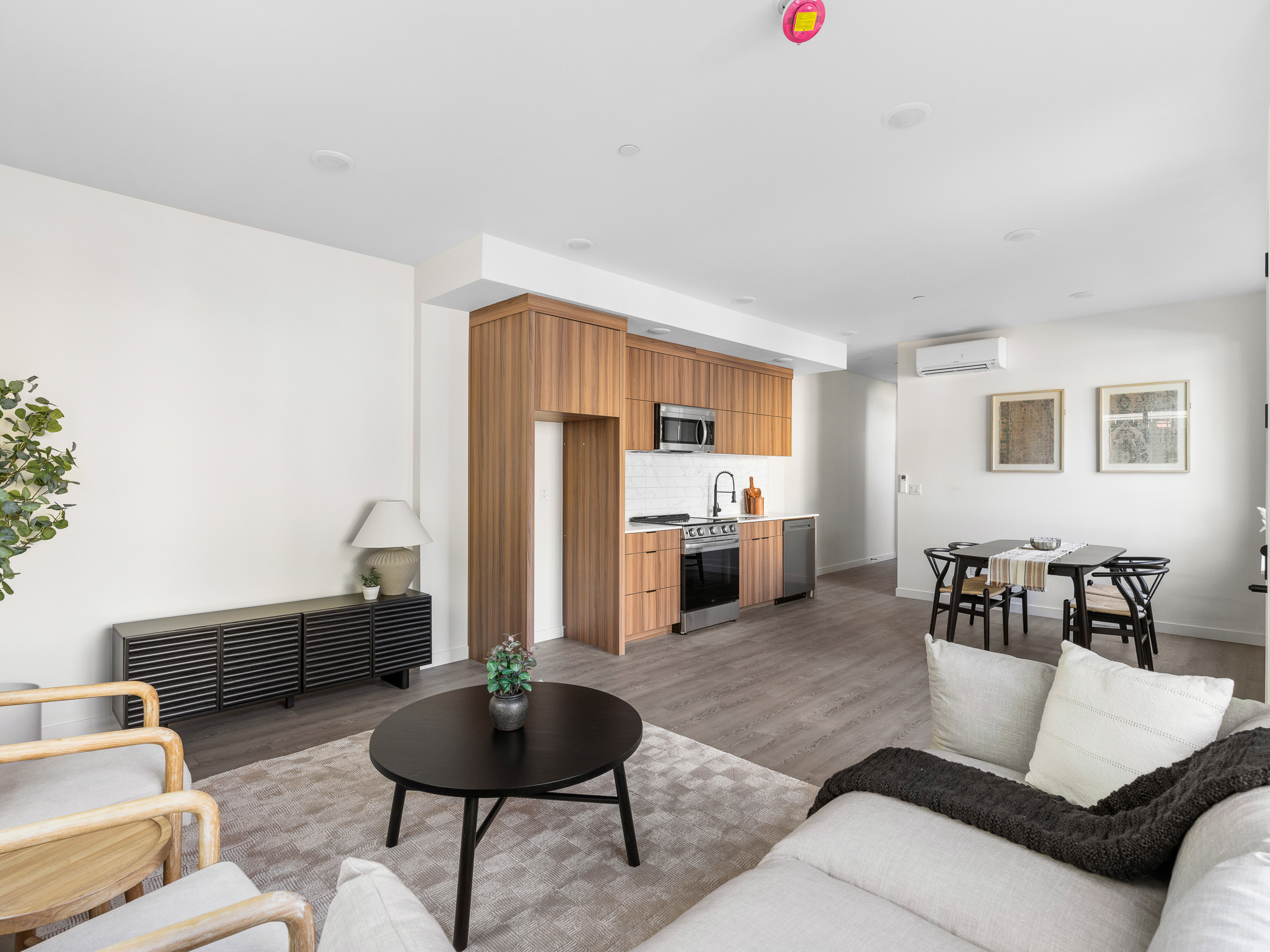
Tenant-Ready Build: What Makes It Work on Day One
Introduction: Readiness Is About Performance, Not Presentation
A tenant-ready build is often confused with a completed build. The floors are polished, the walls are painted, and the lights turn on — so it must be ready. But in commercial construction, surface completion and operational readiness are two entirely different benchmarks. A space can look finished yet still fall short of supporting real business activity.
At Modern Northwest, a tenant-ready build means that a tenant can unlock the door on their first day, power up their equipment, welcome staff or customers, and operate without friction. There should be no scrambling to adjust thermostats that will not stabilize, no unexpected circuit overloads, and no confusion about how building systems function. Readiness is defined by reliability under actual conditions.
This level of preparedness requires more than meeting inspection requirements. It demands coordination across trades, early planning, functional testing, and thoughtful turnover processes. Every system must be aligned with how the tenant will truly use the space.
Modern Northwest approaches readiness as a responsibility, not a marketing phrase. The goal is simple: when occupancy begins, the environment should feel stable, intuitive, and fully operational from the first hour.
Defining a Tenant-Ready Build Beyond Cosmetic Completion
A tenant-ready build extends far beyond finished surfaces. While aesthetic completion matters, functionality determines whether the space truly supports daily operations. Electrical systems, mechanical performance, accessibility routes, and safety infrastructure must all work together without interruption.
Electrical distribution, for instance, must reflect the tenant’s real equipment load. A restaurant kitchen, a medical clinic, and a collaborative office have vastly different demands. If panels are improperly sized or circuits poorly organized, operational slowdowns begin immediately. Modern Northwest prevents these issues by verifying load calculations and testing distribution prior to turnover.
Mechanical systems must be calibrated for actual occupancy rather than empty conditions. Temperature and airflow shift once people, equipment, and lighting generate internal heat. By balancing systems under realistic scenarios, Modern Northwest ensures that environmental comfort remains consistent after move-in.
Data infrastructure also plays a vital role. Connectivity failures can delay opening days and disrupt productivity. Cabling pathways are tested, network points are verified, and coordination with technology vendors occurs before final walkthroughs.
Ultimately, a tenant-ready build is defined by operational harmony. When every system aligns with how the tenant works, the space transitions smoothly from construction site to functioning environment.
Planning for Operational Success During Preconstruction

The success of a tenant-ready build begins long before drywall is installed. Preconstruction is where operational clarity takes shape. Without detailed planning at this stage, readiness becomes reactive instead of intentional.
Modern Northwest conducts early conversations with tenants to understand workflow, occupancy patterns, equipment needs, and future expansion possibilities. These discussions reveal requirements that might otherwise surface too late. For example, identifying future technology upgrades may influence conduit placement or panel capacity.
Scheduling coordination is also addressed early. Delivery routes, staging areas, and phased occupancy plans must align with the tenant’s timeline. This level of foresight reduces disruption and prevents congestion during move-in.
Design documentation integrates these operational details. Mechanical sizing, lighting layout, and plumbing placement are shaped by how the space will function rather than by generic templates. This ensures that readiness is embedded in the structure itself.
By treating preconstruction as an operational planning phase rather than a budgeting exercise, Modern Northwest establishes the foundation for seamless occupancy.
Infrastructure That Performs Without Adjustment
Infrastructure reliability defines whether a tenant-ready build lives up to its name. Electrical systems must handle peak loads. Mechanical equipment must maintain stable conditions. Plumbing systems must function without pressure inconsistencies.
Modern Northwest implements structured commissioning procedures to verify performance under stress. Electrical panels are tested at near-capacity levels. HVAC systems are balanced across zones. Lighting controls are programmed for intuitive use.
Compliance with industry standards ensures safety and durability. The International Code Council (ICC) provides regulatory frameworks that inform many building system requirements.
Testing does not stop at inspection approval. Systems are evaluated in real-world conditions to confirm they will operate predictably once the tenant occupies the space.
When infrastructure performs without adjustment, tenants can focus on their business rather than troubleshooting building systems.
Finishes That Support Immediate and Sustained Use
Finishes contribute more to readiness than many assume. Materials must withstand real activity from the first day forward. Scratches, premature wear, or acoustic discomfort undermine confidence.
Modern Northwest evaluates flooring, wall treatments, and ceiling systems based on performance as well as aesthetics. High-traffic zones receive materials chosen for resilience. Surface durability ensures that the space retains its integrity under heavy use.
Lighting design also influences functionality. Glare, shadowing, or inconsistent brightness can impact productivity. Light placement is calibrated to match task requirements and spatial layout.
Acoustic considerations are equally important. Hard reflective surfaces may amplify sound, creating distraction. Thoughtful acoustic integration supports clarity and focus, especially in collaborative or healthcare environments.
When finishes are selected with performance in mind, the tenant-ready build supports daily operations without requiring early maintenance or adjustments.
Environmental Stability From the First Hour
Indoor environmental quality shapes the first impression of any commercial space. Temperature swings, stagnant air, or humidity imbalances can make a finished space feel incomplete.
Modern Northwest references performance standards established by ASHRAE when calibrating ventilation and thermal comfort systems.
Airflow is balanced, humidity is stabilized, and temperature response times are verified before turnover. These measures ensure that the environment feels consistent upon entry.
Environmental readiness also reduces stress on mechanical equipment. Systems that are properly balanced operate more efficiently and experience fewer early failures.
A tenant-ready build must feel stable immediately. Environmental reliability builds trust in the space and in the team that delivered it.
Safety Systems and Regulatory Alignment
Safety systems are foundational to readiness. Fire suppression, emergency lighting, and accessible egress routes must function without hesitation.
Modern Northwest verifies life-safety systems through rigorous testing prior to occupancy. Fire alarms, sprinkler connections, and exit signage are inspected to ensure compliance.
Guidance from the National Fire Protection Association (NFPA) informs many of these system requirements and safety benchmarks.
Accessibility compliance is also reviewed carefully. Clear routes, compliant restroom layouts, and barrier-free entries contribute to operational inclusivity.
When safety systems are reliable, tenants can open their doors with confidence.
Documentation and Knowledge Transfer
Operational readiness depends on clarity. Tenants must understand how to operate and maintain their systems in order to fully benefit from the space delivered to them. Even the most carefully designed infrastructure can create confusion if its functionality is not clearly communicated at turnover.
Modern Northwest provides structured documentation packages that go beyond standard closeout binders. These include maintenance schedules tailored to the installed systems, warranty documentation organized by trade, equipment specifications, and detailed operation guides for mechanical, electrical, and life-safety components. Instead of handing over stacks of paperwork, the information is curated in a way that allows tenants and property managers to quickly locate what they need.
In addition to written materials, hands-on walkthrough sessions reinforce understanding. Building controls are demonstrated in real time. Lighting systems are programmed and reviewed with occupants. HVAC zoning, thermostat response, and access control settings are explained step by step. This practical engagement ensures that tenants are not left guessing how to manage their environment.
Emergency procedures are also clarified during these sessions. Fire alarm sequences, sprinkler shut-off locations, and electrical panel labeling are reviewed to eliminate uncertainty. Service contacts and escalation pathways are identified clearly so that future maintenance needs can be addressed efficiently.
A tenant-ready build includes not only physical completion but informational transparency. When occupants feel confident operating their space, the transition from construction to occupancy becomes seamless rather than stressful.
Minimizing Post-Occupancy Adjustments

The weeks following occupancy often reveal whether readiness was achieved or merely assumed. Excessive service requests, comfort complaints, or system recalibrations typically signal that final verification was insufficient. Modern Northwest works intentionally to prevent these early disruptions.
Before turnover, systems are stress-tested under conditions that simulate actual use. Electrical circuits are evaluated under load. HVAC systems are observed during peak occupancy simulations. Water pressure and drainage flow are verified during concurrent use. These evaluations help identify subtle inconsistencies before tenants encounter them.
Environmental stability is also monitored during this period. Temperature balance between zones, airflow distribution, and control responsiveness are reviewed over time rather than during a single snapshot inspection. This extended validation helps uncover performance issues that might otherwise appear only after sustained use.
Clear communication with tenants during the early days of occupancy further reduces unnecessary adjustments. By remaining available for follow-up questions and minor refinements, Modern Northwest ensures that small concerns do not escalate into operational setbacks.
When post-occupancy corrections are minimal, confidence grows. Tenants experience continuity rather than interruption, and owners benefit from reduced warranty claims and service costs. Stable performance reinforces trust in both the building and the team that delivered it.
Why Modern Northwest Prioritizes Operational Readiness
For Modern Northwest, a tenant-ready build represents accountability. The firm understands that construction success is measured not by project completion, but by how well a space supports its occupants from the moment they move in. Readiness reflects respect for the tenant’s time, investment, and operational goals.
This philosophy influences every stage of the project lifecycle. During design, operational use cases shape system decisions. During construction, coordination meetings focus on performance alignment rather than simply meeting deadlines. During commissioning, verification extends beyond compliance to real-world functionality.
By integrating planning, commissioning, coordination, and communication, readiness becomes embedded in the process rather than treated as a final checklist item. Every trade partner understands that their work contributes to the tenant’s first experience in the space.
This disciplined approach distinguishes projects that are merely complete from those that are truly operational. When tenants walk into a Modern Northwest build and begin working without hesitation, the difference becomes clear. Operational readiness is not accidental — it is the result of deliberate planning and execution.
Conclusion: When Day One Feels Effortless
A tenant-ready build is not measured by ribbon cuttings or inspection approvals. It is measured by how effortlessly operations begin. When employees arrive, systems should respond intuitively. When customers enter, comfort should feel natural. When equipment powers on, performance should be reliable.
Modern Northwest designs and delivers spaces that anticipate real use. Through early planning, infrastructure verification, environmental calibration, safety compliance, and structured turnover, the firm ensures that readiness is tangible.
True readiness eliminates hesitation. It removes uncertainty and replaces it with confidence. Tenants begin their work without distraction, and owners benefit from smooth occupancy transitions.
In competitive commercial markets, operational continuity is invaluable. A tenant-ready build protects investment, strengthens relationships, and enhances long-term asset value.
If you are preparing a commercial space for new occupants and want assurance that day one unfolds seamlessly, Modern Northwest delivers tenant-ready builds that are engineered for performance, stability, and enduring success.
Internal Links
Modern Northwest Home
Our Services
Contact Us
External Links
International Code Council (ICC)
ASHRAE
National Fire Protection Association (NFPA)
