What Is Build to Suit? How a Build-to-Suit Lease Works, From the Builder's Side
Build to suit means a developer or landlord builds a new commercial building to one tenant's exact specifications, and the tenant commits to a long-term lease before construction starts. The developer funds the land and the building; the tenant gets a custom building without buying it, and pays for it through rent. It is the opposite of a speculative building, which is built first and leased later to whoever signs.
| Approach | Who owns the building | When the tenant commits | How custom |
|---|---|---|---|
| Build to suit | Developer or investor | Before construction, with a long-term lease | Built to one tenant's specs |
| Speculative (spec) building | Developer | After it is built | Generic, for any likely tenant |
| Owner-user, ground-up | The business that uses it | It is the owner | Fully custom |
| Sale-leaseback | Investor, after buying it from the user | Before the sale | Built to the user's specs |
From the developer and investor sources listed below. In every row, someone still has to design, permit and build it.
Planning a new building for one business? We build ground-up commercial projects, site work included, across Portland and Southwest Washington. Licensed in Oregon (CCB #198582) and registered in Washington (L&I MODERNI888R7). Call (360) 326-2747 or send us the site.
How a build-to-suit deal works
The tenant starts with a need: a location, a size, a layout, and a date it has to move in. It finds a developer, or a developer offers a build-to-suit on a site it controls. The tenant lays out its requirements, the developer secures the land and financing and runs the design, permits and construction, and the tenant signs a long-term lease before the first shovel goes in. When the building is done, the tenant moves in and starts paying rent under the agreed terms.
The sources we checked agree on why both sides do it. The tenant keeps its capital for the business instead of tying it up in real estate. The developer avoids building something nobody leases, because the tenant is signed before the money is spent. The price of that certainty is a long lease, often 10 years or more, so the developer can recover the cost of a building made for one user.
Build to suit vs spec vs owner-user
A spec building, or a spec suite inside one, is built before the tenant is known, so it has to suit almost anyone. A build-to-suit is designed around one business from the start. An owner-user building is built by the business that will use it, on land it owns, with no landlord at all. And in a sale-leaseback, the user builds or buys the building, then sells it to an investor and leases it back.
For the builder, the construction looks much the same in all four. What changes is who signs the contract, who approves the specs and how much the schedule is tied to a lease.
What the builder handles
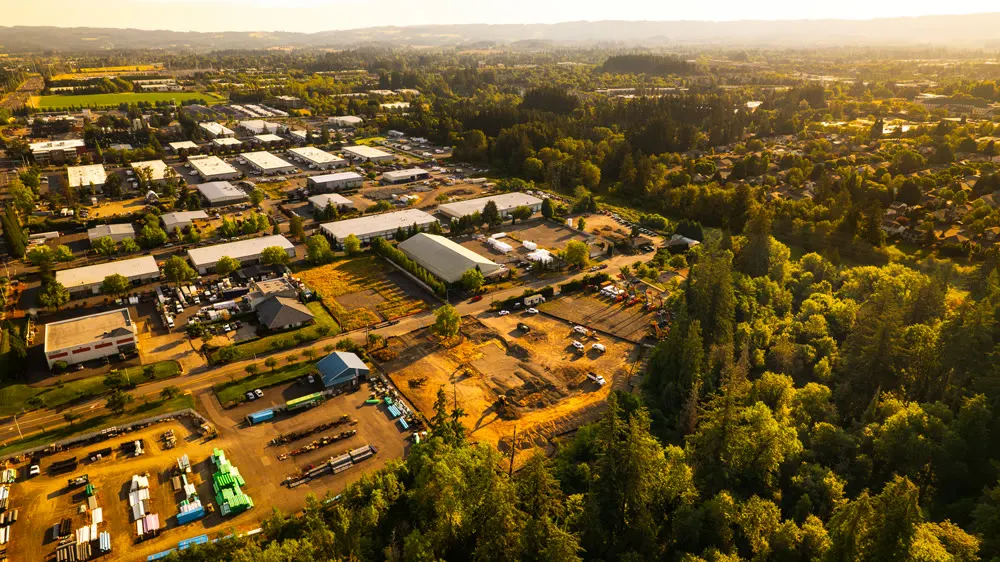
A build-to-suit is ground-up construction, and ground-up means the site is a project of its own before the building starts:
- Site development. Clearing, grading, drainage, utilities and parking. On the EyeHealth Northwest clinic in Aloha, a 10,000 square foot ground-up clinic, the job includes full site development, a parking lot and off-site improvements.
- The building to the tenant's specs. The structure, the systems and the layout the lease describes. On the EquipmentShare building on NE Cherry Drive in Hillsboro, a 10,000 square foot metal building, the steel order sets much of the schedule.
- Permits and inspections. Land use review where it applies, then the building permit, then the final approval that lets the tenant occupy. Our permit guide covers who files.
- The schedule. In a build-to-suit, rent usually starts when the building is complete enough to occupy, so the construction schedule becomes a lease term.
Our records show who each of these buildings is for, not whether the business will lease it or own it. So we describe EyeHealth Northwest and EquipmentShare as ground-up buildings for a named user, not as build-to-suit deals.
What to lock in before construction
- The specs, in writing. Size, layout, ceiling heights, power, loading, parking and any special systems. A change after the lease is signed is a change order.
- The rent start trigger. What "complete" means, and what happens if the building is late.
- A purchase option, if you want one. Some tenants negotiate the right to buy the building later.
- A builder at the table early. Site conditions, utilities and permits move the schedule more than anything else. Getting them priced before the lease is final is what our preconstruction step is for.
The related lease and building terms are in our commercial construction glossary.
Frequently asked questions
What is a build-to-suit lease?
A lease signed before construction, where a developer or landlord builds a custom building to one tenant's specifications and the tenant agrees to lease it for a long term once it is finished. The developer carries the cost of the land and the building; the tenant pays it back through rent.
What is the difference between build to suit and spec?
A build-to-suit building has its tenant before it is designed. A speculative, or spec, building is built first and leased later to whoever signs. Build to suit trades speed for a building made for one business; spec trades customization for a building that is ready sooner.
Who pays for a build-to-suit building?
Usually the developer or an investor funds the land and construction, and the tenant pays through a long-term lease. In a variation, the tenant buys the land and builds, then sells the building to an investor and leases it back.
How long is a build-to-suit lease?
Long. Sources put typical terms at 10 to 20 years, and some at 20 years or more, because the developer needs time to recover the cost of a building made for one tenant.
When does rent start on a build-to-suit?
The lease sets the trigger, often tied to the building being complete enough to occupy. That makes the construction schedule a lease term, not just a construction detail.
The bottom line
Build to suit puts a custom building in front of a business without the business owning it: the developer builds to the tenant's specs, and the tenant signs a long lease before construction. The construction is ordinary ground-up work, but the specs, the schedule and the rent start all become lease terms, so they need to be pinned down early.
Modern Northwest has built commercial projects across Portland and Southwest Washington since 2005. If you are a developer or a business planning a new building, tell us about the site.
Planning a new building?
Tell us about the site and the user. We will help you price the site work and the building before the lease is final.
Request a Free Consultation