
What Does Full Build-Out Mean in Commercial Real Estate?
A full build-out is all the construction it takes to turn a bare commercial space into a finished one for a specific tenant: the walls, ceilings, lighting, plumbing, heating and cooling, electrical, finishes and the inspections that let the business open. When a listing says a space is "fully built out," it usually means that work is already done, often in the last tenant's layout. Those two phrases sound alike but mean different things, and the difference shows up in your budget and your move-in date.
| Condition | What you find on the tour | What is left to build |
|---|---|---|
| Cold or gray shell | Slab floor, open ceiling, outside walls, utilities stubbed to the suite | Everything: a full build-out |
| Warm or vanilla shell, white box | Some basics in place: drywall, a ceiling, lighting, sometimes a restroom | The layout, the business-specific systems and the finishes |
| Second-generation space | A previous tenant's walls and finishes, sometimes partly stripped | Whatever does not fit your use, plus your changes |
| Fully built out, or a spec suite | A finished, move-in-ready space | Little or nothing, if the layout already fits |
Shell names vary by market and by landlord. Ask the broker what the space will be delivered as, not what it looks like today.
Looking at a space and not sure what it will take? We walk spaces before the lease is signed and tell you what the build-out involves. See our tenant improvement work, or call (360) 326-2747.
What a full build-out includes
A full build-out starts where the base building stops. The landlord's building gives you a roof, outside walls, a structure and utility lines brought to the suite. Everything inside your suite that makes it work for your business is the build-out:
- The layout. Interior walls, doors, offices, restrooms, a break room, storage and any rooms your business needs, like exam rooms or a kitchen.
- The systems. Heating and cooling run to each room, plumbing to every sink and fixture, electrical circuits and outlets, lighting, data and phone lines, and fire sprinklers and alarms extended into the new rooms.
- The finishes. Ceilings, flooring, paint, cabinets, counters, storefront glass and signage.
- The approvals. The building permit, the inspections as the work goes, and the final approval before the space can open.
That last item is the one people forget. A space is not done when it looks done. It is done when the city signs off.
"Fully built out" on a listing: what to check
A listing that says "fully built out" sounds like good news, and it can be. But a finished space was finished for someone else. Before you count on moving straight in, check three things:
- Does the layout fit how you work? Moving a wall is cheap. Moving plumbing, adding a restroom or rerouting heating and cooling is not.
- Was it built for a different use? A space built for a dentist has water and power at every chair. A restaurant has a hood and a grease line. A salon has sinks along one wall. If your business is different, some of that comes out first, and demolition is part of the bill.
- Will it be delivered as is, or changed first? "Fully built out" can mean the current layout stays, or that the landlord will reconfigure it for you. The lease should say which.
Sometimes a second-generation space is the best deal in town. We converted a 23,000 square foot former Rite Aid in Washougal into an Ace Hardware: one retailer's store reworked for another. Other times the old build-out is mostly something to tear out. You find out which by walking it with a contractor before you sign.
Who pays for a full build-out
The lease decides, and it is negotiated before you sign. The sources we checked describe the same four setups:
- Turnkey. The landlord builds the space to an agreed plan and pays for it, usually in exchange for higher rent.
- Tenant improvement allowance. The landlord pays a set amount per square foot and you cover the rest. Our guide to the tenant improvement allowance covers how that money works.
- Amortized. The landlord fronts the cost and you pay it back over the lease term through the rent.
- Tenant-controlled. You hire the architect and contractor and pay for the work, and you get full control of the design.
In every one of these, the number you negotiate should come from a real estimate, not a guess. An allowance that sounded generous can fall short once a shell needs everything, and after the lease is signed, the gap is yours. Our tenant improvement cost guide shows how much the starting condition moves the price.
Who does what in a full build-out
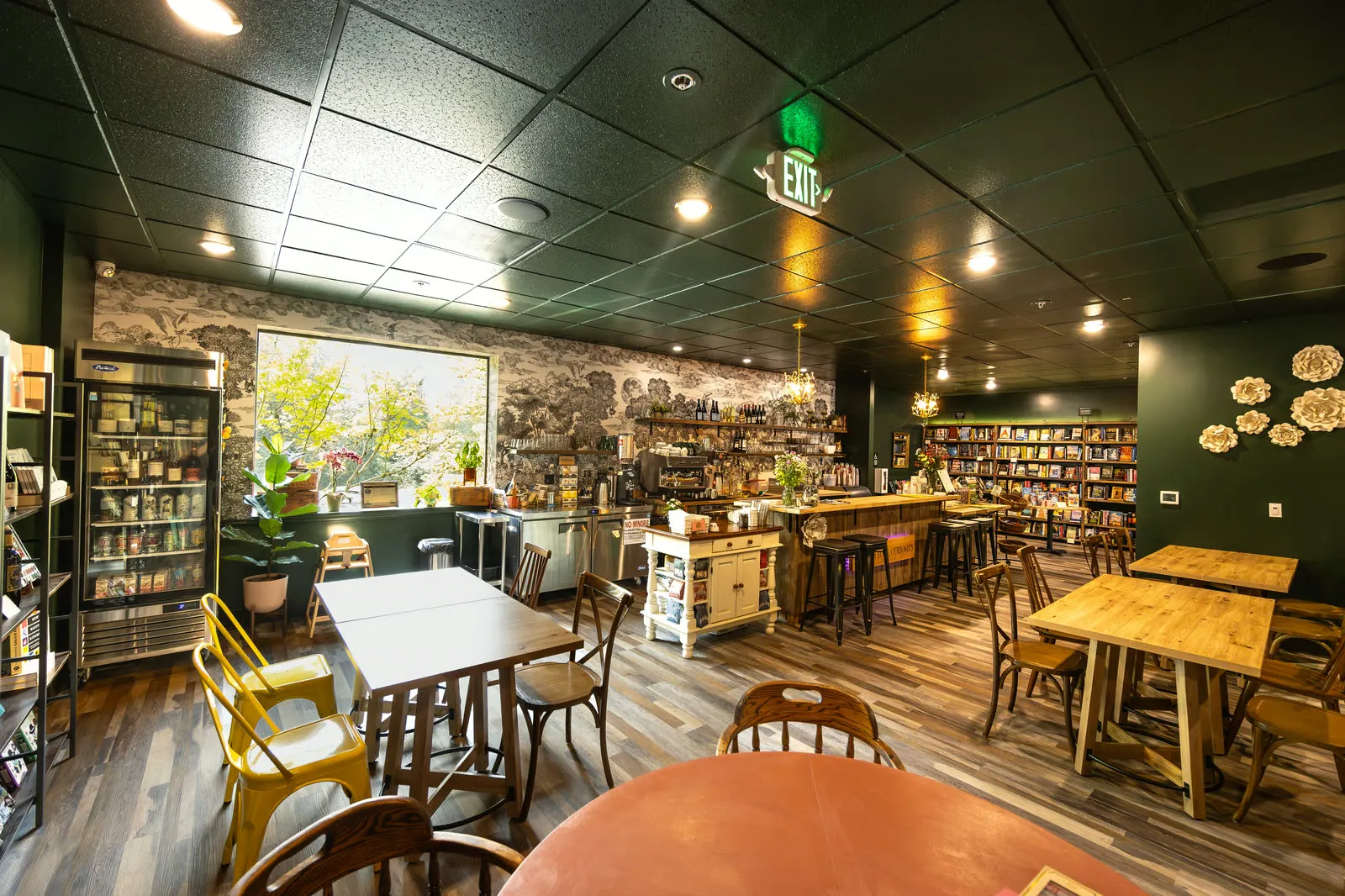
On a shell, the landlord's work and the tenant's work are often two separate jobs. At Mercantile Village in Lake Oswego we ran the landlord work as construction manager at risk from December 2025 to March 2026, getting the shell ready. Then we built out the 3,790 square foot Thirsty Caterpillar bookstore and cafe inside it, finished in May 2026. Two separate contracts: the landlord's shell work first, then the tenant's build-out.
On the tenant side, a full build-out usually involves a designer or architect for the layout, engineers for the systems when the job needs them, and a general contractor who prices the plan, pulls the permit and runs the trades. Who files the permit is its own question, and we cover it in who is responsible for pulling permits.
How long it takes
Size and starting condition decide most of it. A small, simple suite can go fast: we turned an empty 700 square foot retail suite in Vancouver into a children's hair salon for Sit Still Salon in about six weeks. A larger shell with a custom layout needs design, plan review and inspections, and that is usually a matter of months. Our commercial construction timeline breaks down where the time goes.
If you want the fastest possible move-in, a finished space or a spec suite beats any build-out. At Elevate Towers in Hillsboro we built a ground-floor spec suite before any tenant signed, which is the landlord doing the build-out in advance.
Frequently asked questions
Is "fully built out" the same as a full build-out?
Not quite. "Fully built out" on a listing usually describes a space that is already finished, often with the last tenant's layout. A "full build-out" is the work of finishing a shell for one new tenant. The first is a condition you tour. The second is a project you pay for or negotiate.
Who pays for a full build-out?
It is set in the lease. The landlord may pay for all of it in exchange for higher rent (turnkey), give the tenant a set amount per square foot (a tenant improvement allowance), front the cost and add it to the rent, or leave it all to the tenant in exchange for control over the design.
Does a full build-out need a permit?
Yes. New walls, plumbing, electrical and mechanical work all need a building permit and inspections, and the space needs a final approval before anyone moves in. In Portland that goes through Portland Permitting & Development; across the river, through the City of Vancouver or Clark County, depending on the address. A finished space can still need a permit if the new tenant changes how it is used.
How long does a full build-out take?
It depends on the starting condition and the permit. A small, simple suite can be built in weeks: our 700 square foot salon in Vancouver took about six. A larger build-out with design and plan review usually takes several months from signed lease to opening.
Can a fully built-out space still need work?
Often, yes. A space built for a dentist, a restaurant or a salon carries plumbing, power and venting for that use. If your business is different, some of it has to come out before your layout goes in, and taking things out costs money too.
The bottom line
A full build-out is the work of finishing a bare space for one tenant. "Fully built out" is a space where that work was already done for someone. Before you sign, find out which one you are getting, what is left to build, and who pays for it, and get a contractor's number while you can still negotiate.
Modern Northwest has built commercial space across Portland and Southwest Washington since 2005, licensed in Oregon (CCB #198582) and registered in Washington (L&I MODERNI888R7). Send us the listing and we will tell you what the build-out takes.
Looking at a space for your business?
Send us the address or the listing. We will walk it with you and tell you what the build-out will take before you sign.
Request a Free Consultation