
Warm Shell vs Cold Shell vs Vanilla Shell: What You Get With Each
A cold shell is a bare commercial space with no working heating and cooling. A warm shell has the heating and cooling connected. A vanilla shell goes a step further, with finished perimeter walls, a ceiling with lighting and often a restroom, ready for your layout. Gray shell, dark shell and white box are names for points along the same line. The condition a landlord delivers decides how much you have to build, so it matters as much as the rent. When the landlord builds the whole building for one tenant, that is a build-to-suit lease.
| Condition | Heating and cooling | Walls, ceiling, lighting | What the tenant still builds |
|---|---|---|---|
| Cold shell, cold dark shell | None working | Bare structure, often no ceiling or interior lighting | Everything: systems, layout, finishes |
| Gray (grey) shell | Usually none, some utilities in | No ceilings or finishes | Most systems, layout, finishes |
| Warm shell | Connected or ready to hook up | Varies; perimeter walls often finished | Distribution, layout, finishes |
| White box | Basic system in | Walls and ceiling grid, basic lighting | Layout and finishes |
| Vanilla shell | Distributed through the space | Finished perimeter drywall, ceiling with lighting, often a restroom | Layout, business-specific systems, finishes |
Names vary by market and by landlord. Ask the broker for a written list of what is delivered, not just the label.
Looking at a shell space? We walk spaces before the lease is signed and tell you what is missing and what it takes to finish. Recent build-outs include the 3,790 square foot Thirsty Caterpillar at Mercantile Village in Lake Oswego and Sit Still Salon in Vancouver. Licensed in Oregon (CCB #198582) and registered in Washington (L&I MODERNI888R7). Call (360) 326-2747.
Cold shell: the bare starting point
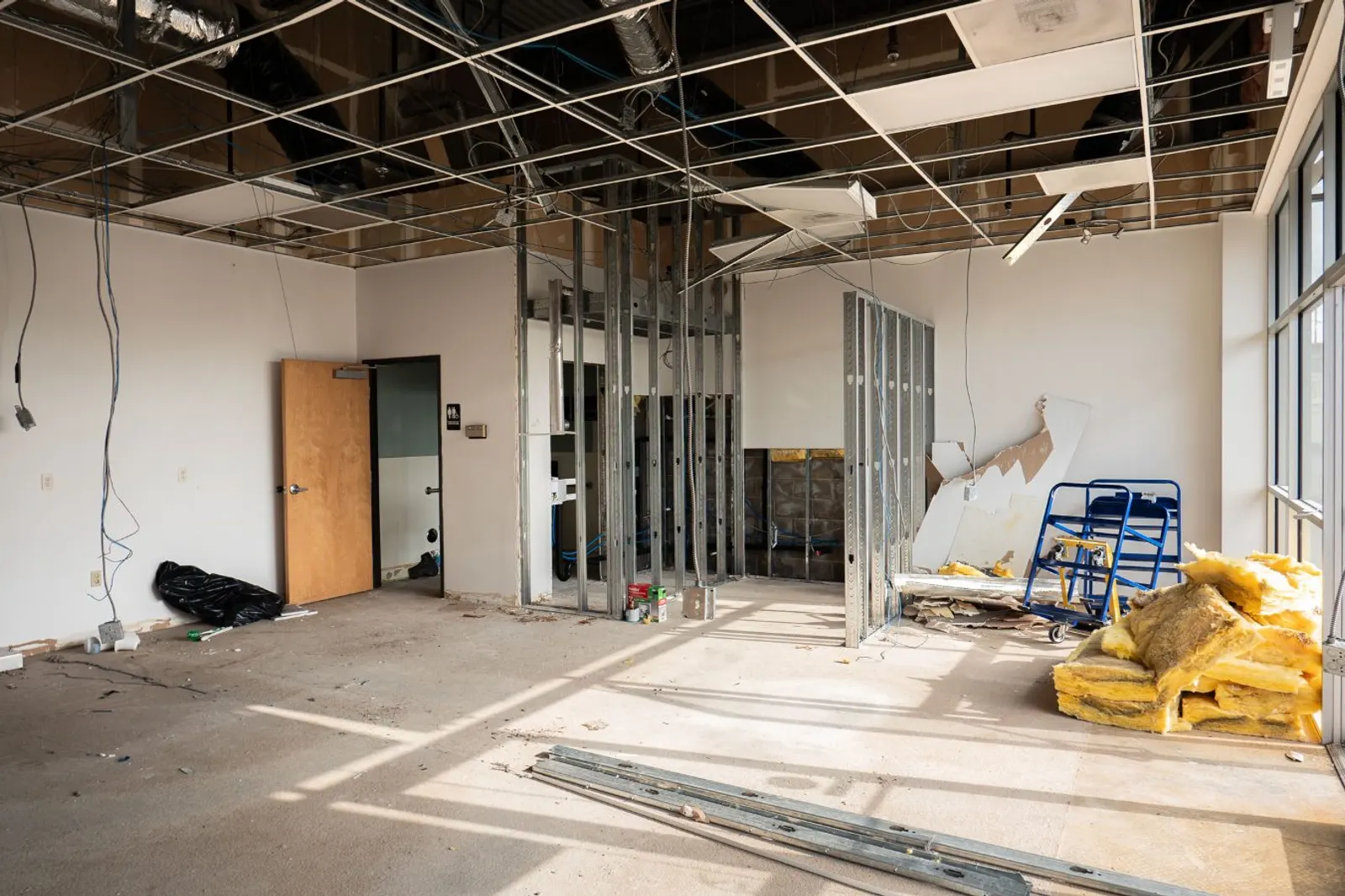
A cold shell is a finished building envelope with almost nothing inside: a slab floor, the outside walls and roof, open structure overhead and utility lines brought to the suite. "Cold" means there is no working heating and cooling, so the space cannot be conditioned until a system goes in. "Dark" usually means no interior lighting either.
A cold shell gives the tenant the most freedom, because nothing is in the way. It also means the tenant builds everything: the heating and cooling, the electrical distribution, the ceiling, the restrooms, the walls and the finishes. That shows up in the budget and the schedule.
Gray shell: bare inside, some utilities
Gray shell, or grey shell, describes a space with little or nothing finished inside. Some utilities may be in, but there are no ceilings or finishes. In many listings, "cold gray shell" and "cold dark shell" are used for the same bare condition.
Warm shell: the systems are there
A warm shell has the heating and cooling system connected, or at least on the premises and ready to hook up, so the space can be heated and cooled. Electrical service and lighting are usually in place, and perimeter walls are often finished. The tenant still extends the ductwork and wiring to fit the layout and builds the rooms.
White box and vanilla shell: ready for your layout
A white box has walls and a ceiling grid in, with basic lighting and heating and cooling, but no tenant layout. A vanilla shell is the most finished of the shell conditions: finished perimeter drywall, a drop or drywall ceiling with lighting, heating and cooling distributed through the space, and often a finished restroom with running water. Many brokers use white box, vanilla shell and warm shell almost interchangeably, which is why the written list matters more than the name.
Past a vanilla shell, you are into second-generation space, built out for a previous tenant, or a spec suite, finished by the owner before anyone signs. We built a spec suite on the ground floor at Elevate Towers in Hillsboro.
Warm shell vs cold shell: how to choose
- Count what you would have to add. In a cold shell, the heating and cooling, electrical distribution, ceiling and restrooms are all on the tenant. Our tenant improvement cost guide has sourced per-square-foot ranges for each condition.
- Compare the whole deal. A cold shell may come with lower rent or a bigger tenant improvement allowance. A vanilla shell may cost more per month but less to build. Run both.
- Think about your use. A clinic, restaurant or salon needs plumbing and power in specific places. A finished vanilla shell built around a generic layout may need some of it moved. A cold shell lets the systems go exactly where your business needs them.
- Check who builds what. On many shells, the landlord's work and the tenant's work are separate contracts. At Mercantile Village in Lake Oswego we ran the landlord work from December 2025 to March 2026, then built the Thirsty Caterpillar space inside it, finished in May 2026.
- Get a contractor in before you sign. The condition, the rent and the allowance are all set in the lease. After that, the gap between what was delivered and what you need is yours.
Whatever the condition, the work to finish it is a full build-out for your business. Our commercial construction glossary has the related terms in one place.
Frequently asked questions
What is the difference between a warm shell and a cold shell?
Heat. A cold shell has no working heating and cooling, so the space cannot be conditioned until a system is installed. A warm shell has the system connected, or ready to hook up, so it can be heated and cooled. Most other differences follow from that.
Is a vanilla shell the same as a warm shell?
Often, and many listings use the words loosely. In the stricter use, a warm shell has the working systems and a vanilla shell adds finished perimeter walls, a ceiling with lighting and often a restroom, ready for the tenant's layout.
What is a gray shell or grey shell?
A space with little or nothing finished inside: bare walls, often no ceiling, no finishes. "Cold gray shell" or "cold dark shell" usually means no working heating and cooling either.
What is a white box?
A space with walls and a ceiling grid in, plus basic lighting and heating and cooling, but no tenant layout. It sits close to a vanilla shell, and the two names are often swapped.
Which shell condition is cheapest to build out?
The more the landlord delivers, the less the tenant builds, so a vanilla shell usually costs the tenant less than a cold shell. Our tenant improvement cost guide has sourced per-square-foot ranges by condition. The rent and the allowance can offset the difference, so compare the whole deal, not just the condition.
The bottom line
Cold means no working heating and cooling, warm means it is connected, and vanilla means the space is finished enough for your layout. The labels are loose, so get the delivered condition in writing and price the build-out before you sign.
Modern Northwest has built commercial space in Portland and Southwest Washington since 2005, including the Ivybrook Academy preschool in a Tigard retail center. Send us the listing and we will tell you what the shell needs.
Looking at a shell space?
Send us the listing or the address. We will walk it with you and tell you what it takes to finish, before you sign.
Request a Free Consultation