Occupancy Classification: The Building Code Groups (A, B, E, M, R, S) Explained
Occupancy classification is how the building code labels what a building, or a part of one, is used for. Oregon's code calls it the formal designation of the building's primary purpose, sorted into groups by the hazards and risks that come with that use. The group decides a lot: how many exits you need, whether you need sprinklers, how many restrooms, and what changes when a new tenant moves in. Here are the groups a commercial owner or tenant runs into, with the kinds of spaces we build in each.
| Group | What it covers (per the code) | Spaces like these |
|---|---|---|
| A, Assembly | People gathering for civic, social or religious functions, recreation, food or drink | Restaurants and bars (A-2), churches (A-3) |
| B, Business | Office, professional or service-type transactions | Offices, clinics, outpatient and professional offices, training centers |
| E, Educational | Six or more people at a time for education through 12th grade; day care for more than five children over 2 1/2 | Schools, preschools |
| F, Factory | Making, assembling or processing products | Manufacturing, workshops |
| M, Mercantile | Display and sale of merchandise | Stores, showrooms, garden centers |
| R, Residential | Sleeping and living; R-2 is more than two dwelling units, mostly permanent | Apartments, townhome buildings |
| S, Storage | Storage not classified as hazardous | Warehouses, storage buildings |
From Chapter 3 of the 2025 Oregon Structural Specialty Code, which took effect October 1, 2025. The code also has Groups H (high hazard), I (institutional) and U (utility), which most tenant improvements never touch.
Not sure which group your space falls in? We check the current permitted use and the new one before you sign. Call (360) 326-2747 or see our tenant improvement work.
Why the group matters so much
Two spaces can look identical, same square feet, same storefront, and be treated very differently by the code because of what happens inside. A store expects shoppers who walk in and out. A restaurant packs more people into the room. A preschool holds children who need more help getting out. The group sets the exits, the fire protection, the restroom count and the accessibility requirements, and the building official writes it on the certificate of occupancy.
That is also why changing the group costs money. Moving a space from one group to another is a change of occupancy, and the new group's rules apply. Our change of use permit guide covers what that triggers in Portland.
The groups commercial tenants hit most
Group B: offices and clinics
Business is the workhorse group for tenant improvements. The code describes it as office, professional or service-type transactions, and its list includes clinics and outpatient offices, professional services, training centers and education above the 12th grade. A family medicine clinic like Orenco Family Medicine in Hillsboro is the kind of space it covers. See our office build-out and healthcare construction pages.
Group A: restaurants, churches and other gathering spaces
Assembly covers places where people gather. Restaurants, cafeterias and bars are listed in A-2, and places of worship fall in A-3. There is an important threshold: a building or tenant space used for assembly with an occupant load under 50 people is classified as Group B instead. Occupant load drives the exits; see means of egress. That is why the seat count on a restaurant plan matters so much. Our restaurant construction page covers what a kitchen build-out includes.
Group M: stores
Mercantile is the display and sale of merchandise. A big-box store like the former Rite Aid we turned into an Ace Hardware in Washougal is mercantile before and after; the sales floor stays a sales floor.
Group E: schools and preschools
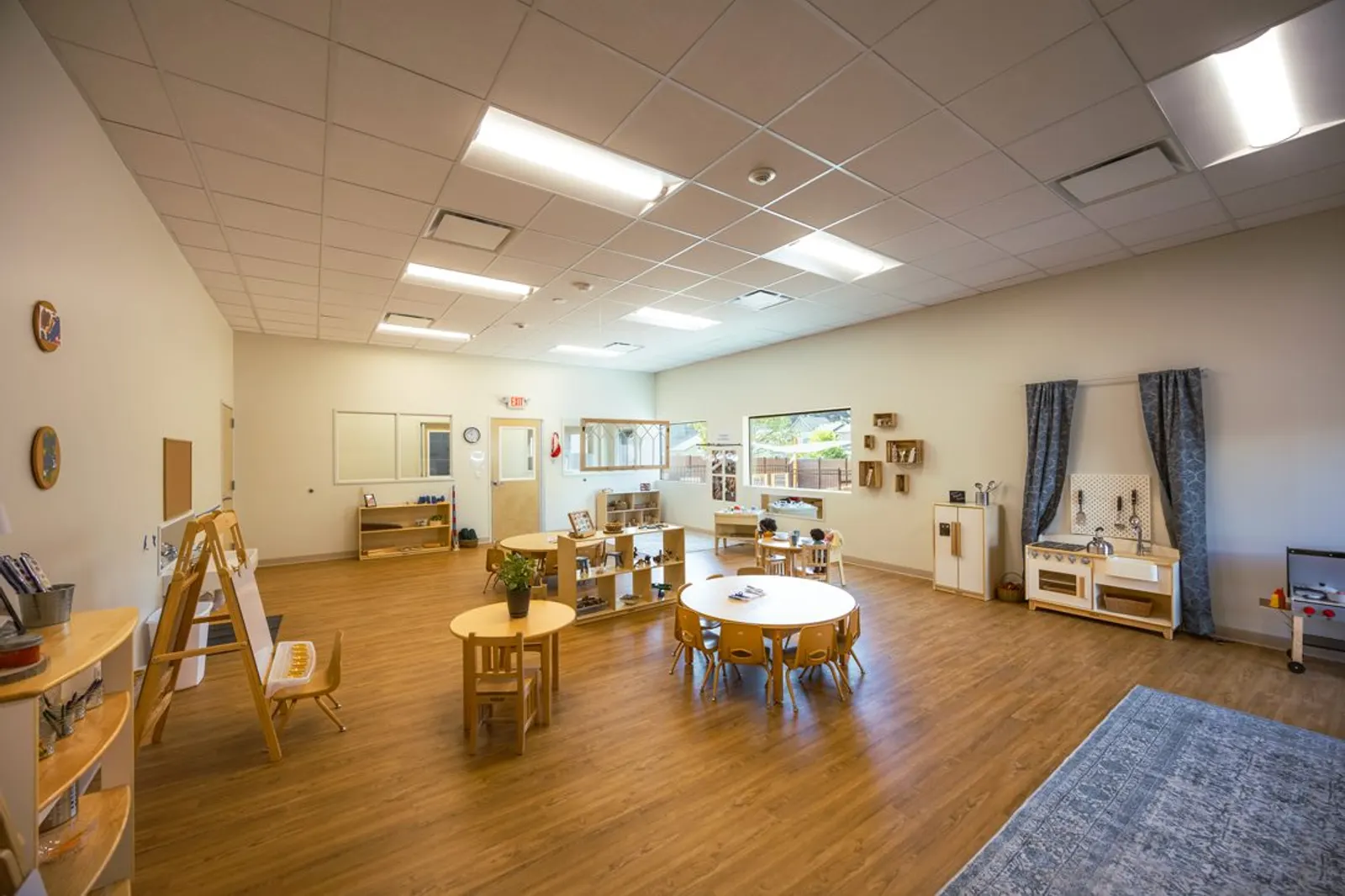
Educational covers six or more people at a time for education through the 12th grade, and day care for more than five children older than two and a half. Turning a retail suite into a preschool moves the space from M to E, which brings its own exit and restroom rules.
Group R-2: apartments
Residential R-2 is a building with more than two dwelling units where people live mostly permanently, which covers apartment buildings like the 16-unit 55th Apartments in Portland. Apartments also carry accessible unit rules; see what is an ADA unit. Walls between those units have their own fire rules, covered in our demising wall guide.
Group S: storage and warehouses
Storage covers buildings or parts of buildings used for storage that is not classified as hazardous. Most warehouses land here; what is stored and how high it is stacked can add fire protection on top. See our industrial construction page.
When one building has more than one group
Plenty of buildings mix groups: shops below with apartments above, a warehouse with offices in front, a church with classrooms. The code sends those to its mixed-occupancy rules, which either hold the whole building to the strictest group or separate the groups with rated walls and floors. We walk through that in what mixed-use construction involves.
How to find your building's current group
- Read the certificate of occupancy. Oregon's code requires it to list the use and occupancy group and the design occupant load.
- Ask the city. Portland asks applicants to research a building's existing permitted occupancy before a change of use; other cities keep the same records with their permit history.
- Check before you sign. If your use is in a different group than the last tenant's, budget for the change before the lease is signed, not after.
Frequently asked questions
What is Group B occupancy?
Business. Under the code, Group B covers offices and professional or service-type transactions, and the list includes clinics and outpatient offices, professional services, training centers and education above the 12th grade. Most office and clinic build-outs are Group B.
Is a restaurant an assembly occupancy?
Restaurants, cafeterias and bars are listed under assembly Group A-2. But a building or tenant space used for assembly with an occupant load of fewer than 50 people is classified as Group B, so a small counter-service spot can be B.
What occupancy group is a daycare or preschool?
Group E, when more than five children older than two and a half receive care or education for less than 24 hours a day. Care for more than five children two and a half or younger is treated differently, so the ages matter.
What happens if my use is not on the list?
The code tells the building official to classify it in the occupancy it most nearly resembles, based on fire safety and relative hazard.
Can one building have more than one occupancy group?
Yes, and many do: shops below and apartments above is the common example. The code handles that in its mixed-use rules, either by treating the whole building to the strictest rules or by separating the groups with rated walls and floors.
The bottom line
Occupancy classification is the code's label for what a space is used for, and the group drives the exits, sprinklers, restrooms and accessibility a space needs. Most tenant spaces are B, M, A, E, R-2 or S. Know your group, and the last tenant's, before you sign the lease.
Modern Northwest has built commercial projects across Portland and Southwest Washington since 2005, licensed in Oregon (CCB #198582) and registered in Washington (L&I MODERNI888R7). Our commercial construction glossary defines the other terms you will see on a permit. If you are changing what a space is used for, send us the address.
Changing what your space is used for?
Send us the address and the new use. We will tell you the group and what it triggers.
Request a Free Consultation